
Services
Surgical treatment of jaw fracture
Repositioning and fixation of jaw fractures under operating-room conditions.
from 250 000 ₸ Splinting from 250,000 ₸, plate osteosynthesis from 450,000 ₸
- MD surgeons
- 3D planning
- International standard
WHAT PATIENTS COME WITH
Common concerns
IN DETAIL
About the procedure in detail
Why the decision has to be made quickly
Why the decision has to be made quickly
The jaw is not just a bone, it is part of how the teeth meet. Fragments that unite a couple of millimetres out of place lead to an incorrect bite, pain when chewing and facial asymmetry. Putting that right means a second operation, so imaging and a decision are needed in the first days after the injury.
The clinic sees patients daily from 10:00 to 19:00. If the injury happened at night, go to an emergency hospital: first aid for a fracture cannot be postponed. We will take on the further treatment and the monitoring of bone union.
What to do before the appointment
What to do before the appointment
Do not load the jaw, switch to soft and liquid food, apply cold and do not try to set anything yourself. A change in the way the teeth meet, being unable to open the mouth fully and numbness of the lip or the chin should all raise concern.
If the fracture has already been treated and the bite still does not come together, bring the imaging as soon as possible: while the bone has not united completely, the position of the fragments can still be corrected.
How the fixation method is chosen
How the fixation method is chosen
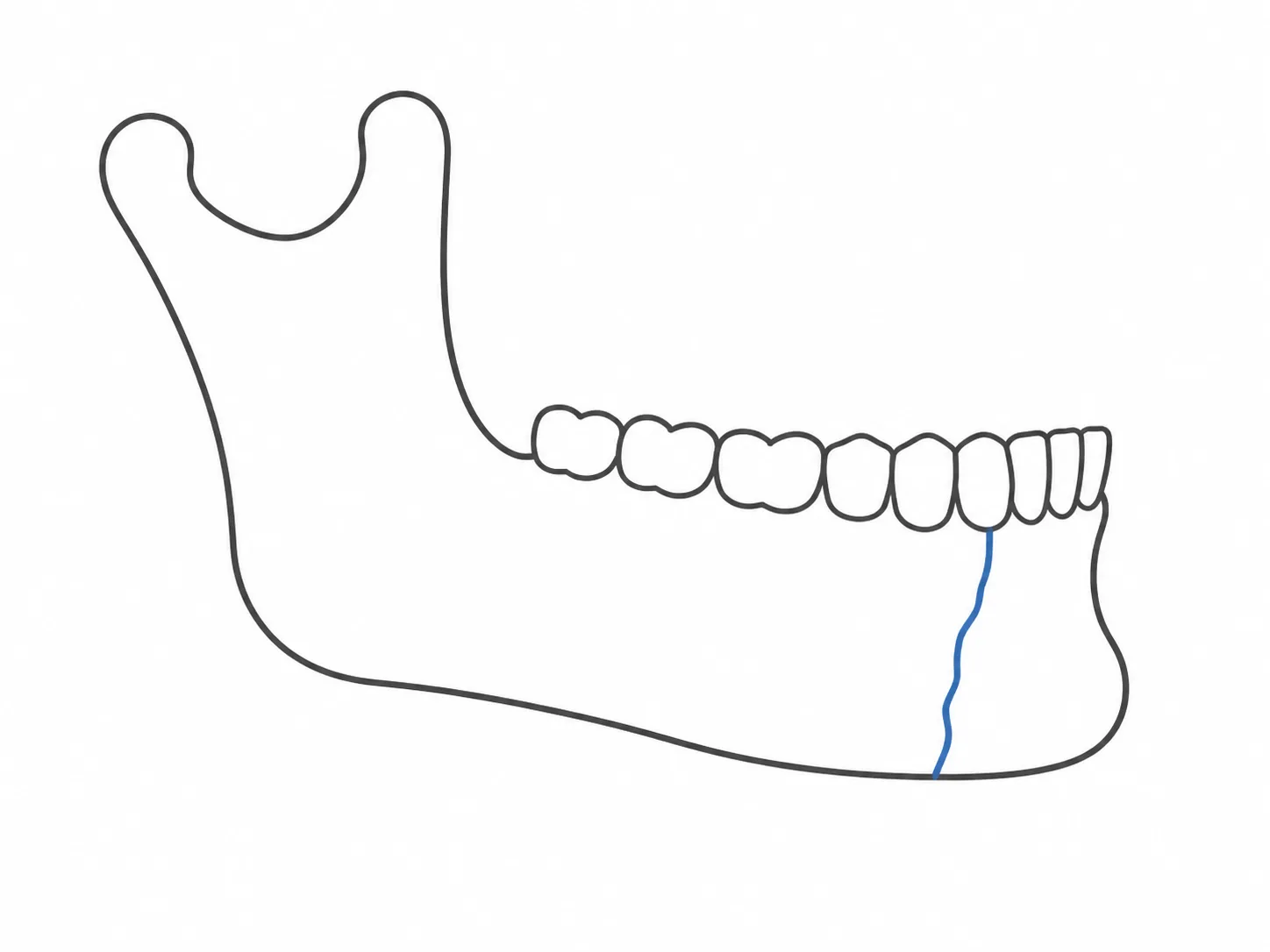
The fracture line can only be seen on imaging. From a CT or CBCT scan the surgeon sees where it runs, whether the fragments have separated and whether the nerve is involved. The method depends on this:
- Splinting. The jaws are fixed with splints and elastic traction so that the fragments stay in the correct position while the bone unites. For that time food has to be soft and liquid.
- Plate osteosynthesis. The fragments are joined with titanium plates and screws - the jaw stays mobile.
The method depends on the nature of the fracture, not on the patient's wishes. If the fragments are not displaced, surgery may not be needed at all.
How the operation goes
How the operation goes
The procedure is carried out in the clinic's operating room. Before it the patient takes tests if needed and has a consultation with the anaesthesiologist: the type of anaesthesia depends on the scope of the operation. The fragments are put back in place and fixed with splints or titanium plates.
Titanium plates stay in the bone and are not visible from the outside. They are removed only when there are medical indications.
Recovery and monitoring of bone union
Recovery and monitoring of bone union
After the operation the patient stays under observation for as long as their condition requires. Then come follow-up examinations and imaging: they show whether the bone is uniting in the position that was set during the operation.
In the first weeks swelling and limited mouth opening are possible. For the period of bone union the doctor prescribes a diet and explains how to care for the mouth. The timelines are given after diagnostics - they depend on the nature of the fracture.
The result is always individual and depends on the diagnosis, the preparation, the scope of treatment and the recovery.
FIND YOUR TREATMENT
Not sure what suits you?
Answer a few questions and the doctor will advise which direction suits you best.
HOW TREATMENT WORKS
How treatment works
-
01
Examination and initial assessment
The doctor determines the severity of the injury
-
02
Diagnostics
CT/CBCT clarifies the nature and location of the fracture
-
03
Treatment plan
The doctor explains whether surgery and what type of fixation is needed
-
04
Surgery
Repositioning and fixation of the fracture are performed in the operating room
-
05
Recovery and follow-up
The doctor monitors bone union and jaw function
BENEFITS
Benefits
Precise repositioning
Anaesthesia support
A licensed operating room
Follow-up after surgery


REVIEWS
Patient reviews
I injured my jaw during a sports training session, and my teeth immediately stopped meeting as they normally did. Imaging at admission confirmed a fracture. The doctor explained that surgery was needed for correct repositioning and told me about the fixation. Recovery took several weeks, but the jaw healed correctly and chewing function returned.
After a fall I developed sharp swelling and pain around the jaw, and it was hard to open my mouth. The clinic immediately ordered a CT scan and confirmed a displaced fracture. The surgery was performed quickly, and the whole treatment plan and timeline were explained in advance. Now the jaw moves freely and no discomfort remains.
I broke my jaw in a car accident, and the uncertainty was frightening. The doctors at the clinic carried out a full diagnostic and calmly explained what lay ahead. The surgery and fixation were successful, and the whole recovery process was monitored closely. Now my bite is normal, and the injury is just a memory.
QUESTIONS
Frequently asked questions
How do I know it is a fracture and not just a bruise?
An exact diagnosis is made from imaging - see a doctor promptly if a fracture is suspected.
Is surgery always needed?
Not always - it depends on the type and displacement of the fracture, determined after diagnostics.
How long does the jaw take to heal?
The timeline is individual and depends on the fracture; the doctor gives an estimate after diagnostics.
Can I eat normal food after surgery?
While the bone is healing the doctor prescribes a special diet, which is gradually widened as recovery goes on.
MORE SERVICES
You may also be interested in


CONSULTATION
Book a Consultation
Free specialist advice