
Services
Correction of malunited jaw fracture after trauma
Surgical correction of a malunited jaw fracture.
from 600 000 ₸ Performed under general anaesthesia; the final price depends on the scope of the osteotomy
- MD surgeons
- 3D planning
- International standard
WHAT PATIENTS COME WITH
Common concerns
IN DETAIL
About the procedure in detail
Why the jaw will not correct itself
Why the jaw will not correct itself
Bone heals in the position in which it was fixed. If the fragments came together with displacement, this will not resolve on its own: over time the bone only secures the wrong position more firmly, and the teeth adapt to it. That is why the jaw is separated again - this is called an osteotomy.
The age of the injury in itself is not an obstacle: the surgery is performed even years after the fracture. What can be achieved in a particular case is shown by computed tomography.
How the surgery is planned
How the surgery is planned
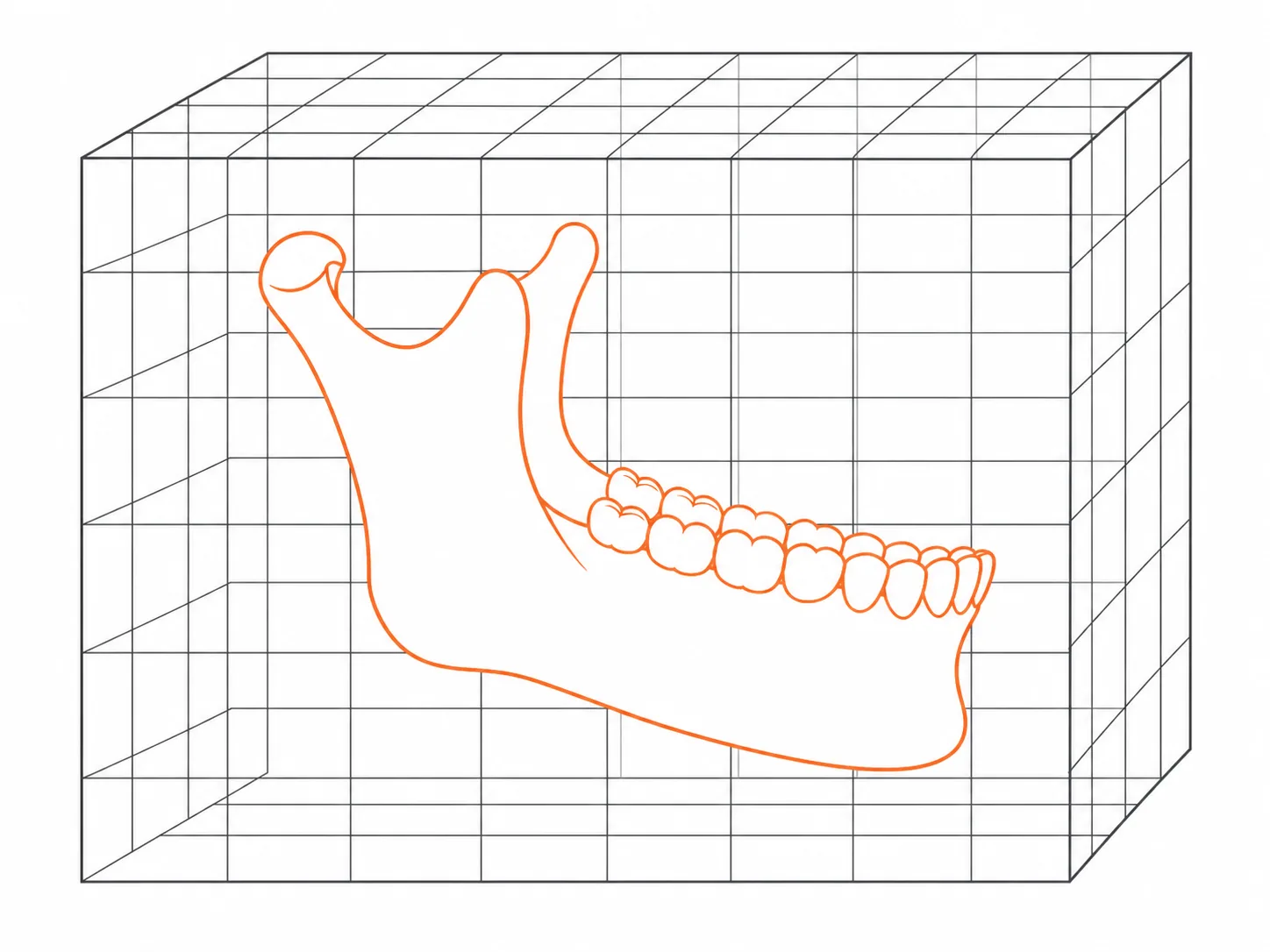
The surgeon studies the imaging and the records of the previous treatment, and uses a recent CT scan to determine exactly where the bone has shifted. He then calculates the new jaw position in a digital 3D model: where to separate the bone, where and by how many millimetres to move it, and how the bite will meet afterwards.
If the teeth have adapted to the incorrect jaw position, an orthodontist prepares them before surgery - otherwise the bite will not meet in the new position.
How the surgery goes
How the surgery goes
The surgery is performed under general anaesthesia. The bone is separated along the line of the old union, set in the calculated position and fixed with titanium plates. Access is most often made through the oral cavity, so no external scars remain; if the case requires external access, the surgeon will say so in advance.
Before the procedure the patient undergoes a mandatory preoperative examination: laboratory tests, computed tomography and, where indicated, consultations with relevant specialists. After the surgery the patient remains under the supervision of medical staff for as long as is medically required.
What is discussed before the surgery
What is discussed before the surgery
A repeat operation is more complex than the first one: the anatomy has already been changed by the trauma and the previous treatment, and there is scar tissue at the fracture site. In the first weeks swelling and limited mouth opening are possible, as well as a temporary change of sensation in the lip and the chin.
The aim of the surgery is to restore the meeting of the teeth and facial symmetry as far as the current anatomy allows. A full match with the condition before the trauma is not always achievable, and the surgeon says this beforehand, not after the surgery.
What to bring to the consultation
What to bring to the consultation
The imaging and records of the previous treatment, if they have been kept, and a recent CT scan if one has already been done. They can be sent in advance - then the doctor will come to the appointment already understanding the situation.
The result is always individual and depends on the diagnosis, the preparation, the scope of treatment and the recovery.
FIND YOUR TREATMENT
Not sure what suits you?
Answer a few questions and the doctor will advise which direction suits you best.
HOW TREATMENT WORKS
How treatment works
-
01
Consultation
The doctor assesses the current jaw position and degree of deformity
-
02
Diagnostics
CT/CBCT and a cephalogram show exactly how the jaw has healed
-
03
Treatment plan
The doctor explains the scope of osteotomy and repositioning needed
-
04
3D planning
The new jaw position and future bite are planned digitally
-
05
Surgery
Osteotomy and repositioning are performed according to an individual plan
-
06
Recovery and follow-up
The doctor monitors healing and result stabilisation
BENEFITS
Benefits
3D planning
An experienced team
A licensed operating room
Follow-up after surgery


REVIEWS
Patient reviews
Years ago I broke my jaw, but the treatment in another city wasn't done quite correctly, and my bite remained off ever since. I hesitated for a long time before deciding to do something about it. At the consultation the surgeon showed me on the imaging exactly what the problem was and explained that an osteotomy would be needed. The surgery was successful, and for the first time in years my teeth close normally.
After an old injury my jaw healed with slight displacement, which caused noticeable facial asymmetry that hadn't been there before. I went for a consultation, the doctor reviewed the imaging in detail and proposed a plan with 3D modelling. The surgery was more complex than a standard bite correction, but the result met my expectations - the asymmetry disappeared.
After a fracture in my teenage years, no one warned me the jaw could heal incorrectly. As an adult, problems with my bite and chewing began. The clinic identified the root cause and proposed surgical correction with preparation. Recovery took time, but the result was worth it - my bite is correct now.
QUESTIONS
Frequently asked questions
Can the jaw be corrected even if the fracture healed long ago?
Yes, in such cases an osteotomy is needed - the doctor re-separates and correctly fixes the bone.
How is this different from a standard orthognathic operation?
The principle is similar, but here the doctor first accounts for the deformity that has already healed.
Is preparation with braces needed?
Often yes - an orthodontist may prepare the teeth before surgery so the bite meets correctly afterwards.
How long does recovery take?
The timing is individual and depends on the scope of surgery; the doctor explains the approximate timeline at the consultation.
MORE SERVICES
You may also be interested in


CONSULTATION
Book a Consultation
Free specialist advice