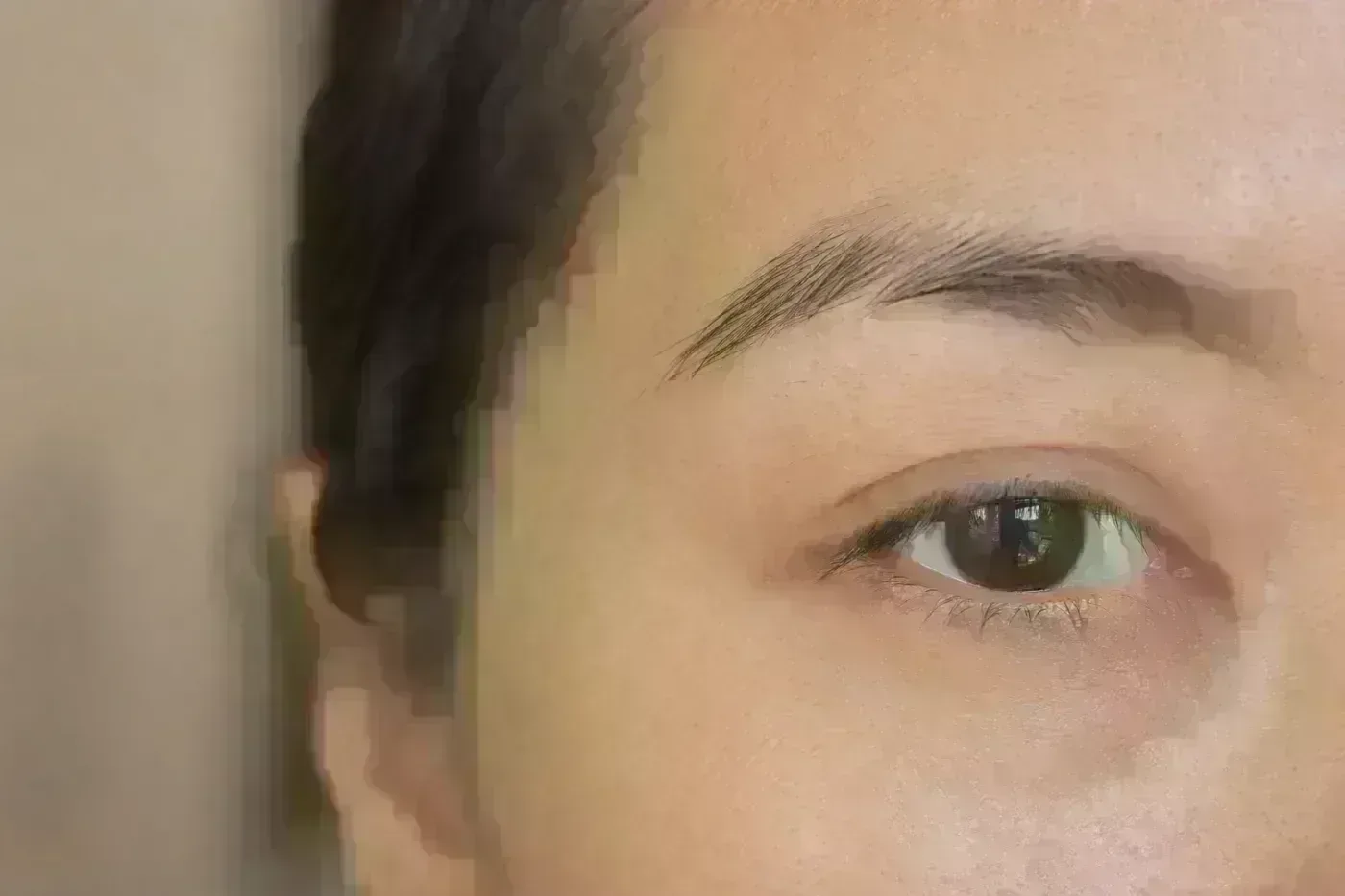
Drooping eyelids and a tired look
With age the skin of the upper eyelid loses elasticity and can hood over the lash line, while under-eye bags appear as fat tissue redistributes. The eyes start to look tired and heavy even when a person is well rested.
When surgery is justified
Blepharoplasty makes sense when eyelid hooding interferes not only aesthetically but sometimes functionally, restricting peripheral vision; when excess skin or fat herniation is clearly pronounced and does not respond to non-surgical methods; and when the change is steadily progressing with age rather than being temporary puffiness.
If the changes are minimal, the doctor will say so honestly at the consultation - surgery should be justified, not offered "just in case".
How blepharoplasty is performed
Before surgery, diagnostics assess the condition of the eyelid skin, muscle and fat pads, along with the patient's general health. The surgeon discusses the scope of correction: upper lids, lower lids, or both. The procedure itself involves removing excess skin and, if needed, redistributing fat tissue while refining the eyelid contour.
A realistic result
The goal of blepharoplasty is an open, refreshed look rather than a "surprised" expression. A good result looks natural: the eye retains its individual shape, but the tired appearance disappears. Full healing and result stabilisation take time, so the final outcome is assessed not right after surgery but several weeks later.